
| SAFETY DATA SHEET |  |
| PRODUCT AND COMPANY IDENTIFICATION |
| PRODUCT NAME: | Plumeria Fragrance Oil |
| PRODUCT TYPE: | Fragrance compound (mixture) |
| RECOMMENDED USE: | Intended to be used in the manufacture of products for consumers. Not for personal use in this form or concentration. |
| COMPANY: | California Candle Supply |
| ADDRESS: | 1011 E Route 66, Glendora, CA 91740 |
| ISSUE / REVISION DATE: | 11/23/2026 |
| EMERGENCY TELEPHONE: | CHEMTREC 1-800-424-9300 |
| HAZARDS IDENTIFICATION |
This material is considered hazardous by the OSHA Hazard Communication Standard (29 CFR 1910.1200).
| CLASSIFICATION: | Flammable Liquid Category 4; Skin Corrosion / Irritation Category 2; Eye Damage / Irritation Category 2; Skin Sensitization Category 1; Toxic to Reproduction Category 2 |
| SIGNAL WORD: | Warning |
| HAZARD STATEMENTS: | H227: Combustible liquid. H315: Causes skin irritation. H317: May cause an allergic skin reaction. H319: Causes serious eye irritation. H361: Suspected of damaging fertility or the unborn child (exposure route). |
Pictograms:
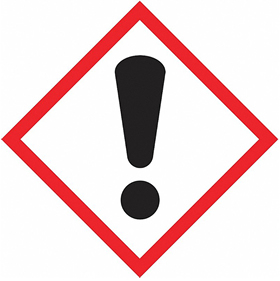
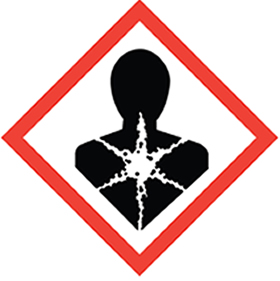
Precautionary statements:
Do not handle until all safety precautions have been read and understood.
Keep away from heat, sparks, open flames and hot surfaces. - No smoking.
Avoid breathing vapour or dust.
Wash hands and other contacted skin thoroughly after handling.
Contaminated work clothing should not be allowed out of the workplace.
Wear protective gloves/eye protection/face protection.
IF ON SKIN: Wash with plenty of soap and water.
IF IN EYES: Rinse cautiously with water for several minutes.
Remove contact lenses, if present and easy to do.
Continue rinsing.
IF exposed or concerned: Get medical advice/attention.
If skin irritation or rash occurs: Get medical advice/attention.
If eye irritation persists: Get medical advice/attention.
Take off contaminated clothing and wash before reuse.
In case of fire: Use carbon dioxide, dry chemical, foam for extinction.
Store in a well-ventilated place.
Keep cool.
Store locked up.
Dispose of contents/container to approved disposal site, in accordance with local regulations.
Hazards not otherwise classified (HNOC): None.
| COMPOSITION/INFORMATION ON INGREDIENTS |
| Chemical Name | CAS Number | Weight % | GHS Classification |
|---|---|---|---|
| Benzyl benzoate | 120-51-4 | 20-<50% | Acute Tox. 4; H302 |
| Hexyl cinnamaldehyde | 101-86-0 | 10-<20% | Skin Sens. 1B; H317 |
| Benzyl salicylate | 118-58-1 | 10-<20% | Skin Sens. 1B; H317 |
| Phenylisohexanol | 55066-48-3 | 5-<10% | Acute Tox. 4; Skin Irrit. 2; Eye Irrit. 2A; H302-H315-H319 |
| Linalool | 78-70-6 | 1-<5% | Skin Irrit. 2; Eye Irrit. 2A; Skin Sens. 1B; H315-H317-H319 |
| Florosa | 63500-71-0 | 1-<5% | Eye Irrit. 2A; H319 |
| Ethyl linalool | 10339-55-6 | 1-<5% | Eye Irrit. 2A; Skin Sens. 1B; H317-H319 |
| Phenyl ethyl alcohol | 60-12-8 | 1-<5% | Acute Tox. 4; Eye Irrit. 2A; H302-H319 |
| Citronellol | 106-22-9 | 1-<5% | Skin Irrit. 2; Eye Irrit. 2A; Skin Sens. 1B; H315-H317-H319 |
| Hydroxycitronellal | 107-75-5 | 1-<5% | Eye Irrit. 2A; Skin Sens. 1B; H317-H319 |
| Methyl benzoate | 93-58-3 | 0.1-<1% | Acute Tox. 4; Repr. 2; H302-H361 |
| Helional | 1205-17-0 | 0.1-<1% | Skin Sens. 1B; Repr. 2; H317-H361 |
| Anisic aldehyde | 123-11-5 | 0.1-<1% | Repr. 2; H361 |
| Terpinene gamma | 99-85-4 | 0.1-<1% | Repr. 2; Asp. Tox. 1; H304-H361 |
| Heliotropine | 120-57-0 | 0.1-<1% | Skin Sens. 1B; Repr. 2; H317-H361 |
| Para-cresyl methyl ether | 104-93-8 | 0.1-<1% | Acute Tox. 4; Skin Irrit. 2; Repr. 2; H302-H315-H361 |
| Methyl octine carbonate | 111-80-8 | 0.1-<1% | Acute Tox. 4; Skin Irrit. 2; Skin Sens. 1A; H302-H315-H317 |
The exact percentage concentrations of components are being withheld as a trade secret.
| FIRST AID MEASURES |
Description of first aid measures
| Inhalation: | Remove from exposure site to fresh air, keep at rest, and obtain medical attention. |
| Eye exposure: | IF IN EYES: Rinse cautiously with water for several minutes. Remove contact lenses, if present and easy to do. Continue rinsing. |
| Skin exposure: | IF ON SKIN: Wash with plenty of soap and water. |
| Ingestion: | Rinse mouth with water and obtain medical attention. |
Most important symptoms and effects, both acute and delayed
Causes skin irritation.
May cause an allergic skin reaction.
Causes serious eye irritation.
Suspected of damaging fertility or the unborn child (exposure route).
Indication of immediate medical attention and special treatment needed, if necessary
Treat symptomatically
| FIRE FIGHTING MEASURES |
Extinguishing media
| Suitable media: | Carbon dioxide, Dry chemical, Foam. |
Specific hazards arising from the chemical
| In case of fire, may be liberated: | Carbon monoxide, Unidentified organic compounds. |
Protective Equipment and Precautions for Firefighters
In case of insufficient ventilation, wear suitable respiratory equipment.
| ACCIDENTAL RELEASE MEASURES |
Personal precautions, protective equipment and emergency procedures:
Avoid inhalation. Avoid contact with skin and eyes. See protective measures under Section 7 and 8.
Methods and material for containment and cleaning up:
Remove ignition sources. Provide adequate ventilation. Avoid excessive inhalation of vapours. Contain spillage immediately by use of sand or inert powder. Dispose of according to local regulations.
| HANDLING AND STORAGE |
Precautions for safe handling:
Keep away from heat, sparks, open flames and hot surfaces. - No smoking. Use personal protective equipment as required. Use in accordance with good manufacturing and industrial hygiene practices. Use in areas with adequate ventilation Do not eat, drink or smoke when using this product.
Conditions for safe storage, including any incompatibilities:
Store in a well-ventilated place. Keep container tightly closed. Keep cool. Ground/bond container and receiving equipment. Use explosion-proof electrical, ventilating and lighting equipment. Use only non-sparking tools. Take precautionary measures against static discharge.
| EXPOSURE CONTROLS / PERSONAL PROTECTION |
Control parameters
Exposure guidelines
This product does not contain any hazardous materials with occupational exposure limits established by the region specific regulatory bodies.
Other exposure guidelines
No information available
Exposure controls
Engineering measures
Showers, eyewash stations, ventilation systems.
Individual protection measures, such as personal protective equipment
Eye/Face and Skin Protection
Wear protective gloves/eye protection/face protection, and suitable protective clothing
Respiratory protection
If exposure limits are exceeded or irritation is experienced, NIOSH/MSHA approved respiratory protection should be worn. Positive-pressure supplied air respirators may be required for high airborne contaminant concentrations.
Respiratory protection must be provided in accordance with current local regulations. A NIOSH-approved air-purifying respirator with an organic vapor cartridge or canister may be permissible under certain circumstances where airborne concentrations are expected to exceed exposure limits. Protection provided by air-purifying respirators is limited. Use a positive pressure, air-supplied respirator if there is any potential for uncontrolled release, exposure levels are not known or any other circumstances where air-purifying respirators may not provide adequate protection.
Hygiene measures
Handle in accordance with good industrial hygiene and safety practice.
| PHYSICAL AND CHEMICAL PROPERTIES |
Physical and chemical properties
| Appearance: | Not determined |
| Odor: | Characteristic odor |
| Odor threshold: | Not determined |
| Melting point / freezing point: | Not determined |
| Initial boiling point / range: | Not determined |
| Flammability (solid, gas): | Not determined |
| Upper/lower flammability or explosive limits: | Not determined |
| Flash point: | 200 °F / 93 °C |
| Auto-ignition temperature: | Not determined |
| Decomposition temperature: | Not relevant |
| pH: | Not determined |
| Viscosity: | Not determined |
| Solubility(ies): | Not determined |
| Partition coefficient: n-octanol/water: | Not determined |
| Vapor pressure: | 0.024 |
| Relative density: | Not determined |
| Vapor density: | Not determined |
| Particle Characteristics: | Not determined |
| Other information: | None available |
| STABILITY AND REACTIVITY |
Reactivity:
Presents no significant reactivity hazard, by itself or in contact with water.
Chemical stability:
Good stability under normal storage conditions.
Possibility of hazardous reactions:
Not expected under normal conditions of use.
Conditions to avoid:
Avoid extreme heat.
Incompatible materials:
Avoid contact with strong acids, alkalis or oxidising agents.
Hazardous decomposition products:
Not expected.
| TOXICOLOGICAL INFORMATION |
Information on toxicological effects
This mixture has not been tested as a whole for health effects. The health effects have been calculated using the methods outlined in 29 CFR 1910.1200.
| Acute Toxicity: | Based on available data the classification criteria are not met. |
| Acute Toxicity Oral | 2378 |
| Acute Toxicity Dermal | >5000 |
| Acute Toxicity Inhalation | Not Available |
| Skin corrosion/irritation: | Skin Corrosion / Irritation Category 2 |
| Serious eye damage/irritation: | Eye Damage / Irritation Category 2 |
| Respiratory or skin sensitisation: | Sensitization - Skin Category 1 |
| Germ cell mutagenicity: | Based on available data the classification criteria are not met. |
| Carcinogenicity: | Based on available data the classification criteria are not met. |
| Reproductive toxicity: | Toxic to Reproduction Category 2 |
| STOT-single exposure: | Based on available data the classification criteria are not met. |
| STOT-repeated exposure: | Based on available data the classification criteria are not met. |
| Aspiration hazard: | Based on available data the classification criteria are not met. |
| Additional Information | None available |
| ECOLOGICAL INFORMATION |
Ecotoxicity:
Very toxic to aquatic life.
Toxic to aquatic life with long lasting effects.
| Persistence and degradability: | Not available |
| Bioaccumulative potential: | Not available |
| Mobility in soil: | Not available |
| Other adverse effects: | Not available |
| DISPOSAL CONSIDERATIONS |
Waste treatment
Dispose of in accordance with local regulations. Avoid disposing into drainage systems and into the environment. Empty containers should be taken to an approved waste handling site for recycling or disposal.
| TRANSPORT INFORMATION |
| Regulation | UN Number | Proper Shipping Name | Class | Sub Risk | Packing Group |
|---|---|---|---|---|---|
| UN Model Regulations | UN3082 | ENVIRONMENTALLY HAZARDOUS SUBSTANCE, LIQUID, N.O.S. (Benzyl benzoate, Hexyl cinnamaldehyde) | 9 | — | III |
| US DOT | Not classified | — | — | — | — |
| US DOT (Bulk) | Not classified | — | — | — | — |
| IMDG | UN3082 | ENVIRONMENTALLY HAZARDOUS SUBSTANCE, LIQUID, N.O.S. (Benzyl benzoate, Hexyl cinnamaldehyde) — MARINE POLLUTANT | 9 | — | III |
| ADR, RID, ADN | UN3082 | ENVIRONMENTALLY HAZARDOUS SUBSTANCE, LIQUID, N.O.S. (Benzyl benzoate, Hexyl cinnamaldehyde) | 9 | — | III |
| ICAO TI | UN3082 | ENVIRONMENTALLY HAZARDOUS SUBSTANCE, LIQUID, N.O.S. (Benzyl benzoate, Hexyl cinnamaldehyde) | 9 | — | III |
US DOT refers to domestic transport by road/rail within the 48 ground states.
| Environmental hazards: | This is an environmentally hazardous substance. |
| Special precautions for user: | None additional |
| Transport in bulk according to Annex II of MARPOL73/78 and the IBC Code: | Not applicable |
| REGULATORY INFORMATION |
Safety, health and environmental regulations/legislation specific for the substance or mixture None additional Additional information None additional
| OTHER INFORMATION |
| REVISION DATE: | 11/23/2026 |
| SOURCE SDS VERSION: | 3 (11/23/2026) |
| KEY TO REVISIONS: | Document updated. |
Manufacturer disclaimer: The information in this safety data sheet is to the best of our knowledge true and accurate but all data, instructions, recommendations and/or suggestions are made without guarantee.
DISCLAIMER: The information in this MSDS was obtained from current and reliable sources. However, the data is provided without any warranty, expressed or implied, regarding its correctness and accuracy. Since the conditions for use, handling, storage and disposal of this product are beyond the manufacturer's control, it is the user’s responsibility both to determine safe conditions for use of this product and to assume liability for loss, injury, damage or expense arising out of the product’s improper use. No warranty, expressed or implied, regarding the product described herein shall be created by or inferred from any statement or omission in this MSDS. Various government agencies (e.g. DOT, EPA, FDA) may have specific regulations concerning the transportation, handling, storage, use or disposal of this product, which may not be reflected in this MSDS. The user should review these regulations to ensure full compliance.